41 organic food standards and labels the facts
Labeling Organic Products | Agricultural Marketing Service Finished product is certified organic and produced in full compliance with the USDA organic regulations: entire product may be labeled organic and display the USDA organic seal; All instances of specific fibers in finished product are certified organic: label may claim the specific fibers are organic and identify the percentage of organic fibers Organic Food Statistics About the 2020 Market (Infographic) Jan 02, 2020 · 5. Understanding the meaning behind different organic labels is crucial. (FamilyDoctor) Before you switch, remember one of the most important facts about organic food: know your labels. “100% organic” means the food has been grown and processed using FDA-approved methods and ingredients.
Organic Food: Fact vs. Perception | American Heart Association For agricultural products, these requirements include nonuse of hormones, pesticides, irradiation or bioengineering. Animals used for meat, poultry, eggs or dairy products must not receive antibiotics or growth hormones. Organic products are subject to the same USDA safety standards as all other food products.

Organic food standards and labels the facts
Is Organic Food Really Better for the Environment? 22/10/2019 · Consider that crop yields of organic crops are about 35% lower than conventional crops (USDA data), so it follows that for every bushel of organic food produced, there is a 35% larger footprint; 35% more water is used; and more fertilizer, pesticides (yes, even for organic), and labor is used. The water table contamination issue mentioned above really comes into play … 10 Things You Should Know About Organic Labels Nov 20, 2019 — What Are the Requirements for an Organic Label? · Contain at least 95% organic ingredients · The remaining 5% must be allowed ingredients · Any ... What Does Organic Mean? The Facts about Organic Food Standards and Labels Only food labeled "organic" has been certified as meeting USDA organic standards. For more detailed information on the USDA organic standards, visit the USDA National Organic Program website or call the National Organic Program at 202-720-3252, or write USDA-AMS-TM-NOP, Room 4008 S. Bldg., Ag Stop 0268, 1400 Independence, SW, Washington, DC 20250.
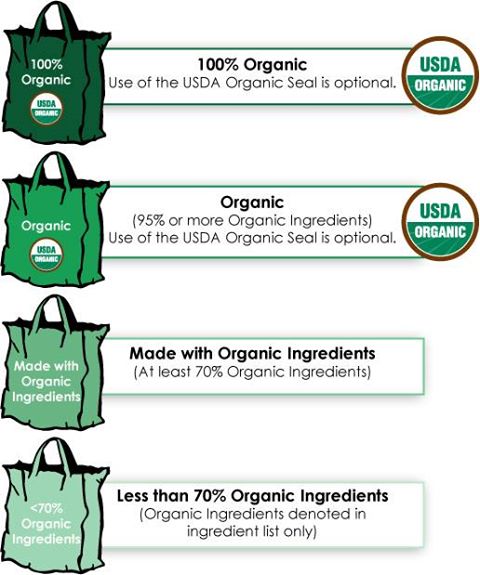
Organic food standards and labels the facts. Organic Production/Organic Food: Information Access Tools USDA Consumer Brochure: Organic Food Standards and Labels: The Facts. “What is organic food? Organic food is produced by farmers who emphasize the use of renewable resources and the conservation of soil and water to enhance environmental quality for future generations. Organic meat, poultry, eggs, and dairy products come from animals that are ... Who Buys Organic Food: Different Types of Consumers 20/11/2019 · The American Academy of Pediatrics (AAP) released their findings in 2012 on how organic food benefits young children. However, parents have been fans of organic food for years, even before the AAP gave organics a thumbs up. The most recent reports show that U.S. families are increasingly embracing organics in a wide range of categories. 24 Organic Food Statistics & Facts for a Much Healthier 2022 5.7% of food sold in America is organic, according to facts about organic food. 83% of US citizens will opt for organic, while the number of organic food proponents was 30% six years earlier. 62% of US consumers would purchase organic if it were more affordable. Millennials with children are the most likely to spend money on organic food. Organic Food - FoodFacts Foods made with 70 - 95% organic ingredients can be labeled as "made with organic…" naming the specific ingredients that comply. This claim can be made on the front of the packaging food containing less than 70% organic ingredients may list specific organically produced ingredients on the side of the packaging, but not on the front panel
Organic on Food Labels | FDA Organic on Food Labels FDA does not regulate the use of the term "organic" on food labels. The National Organic Program (NOP) is the federal regulatory framework governing organically produced... Organic vs. Non-Organic Food Facts - Connected Women Organic-Must-Buy. The Environmental Working Group says that 99% of apples, 98% of peaches and 97% of nectarines are all positive for at least one pesticide residue. Most of all non-organic grapes and bell peppers tested positive for 15 different pesticides while cherry tomatoes, snap peas and strawberries showed 13 different pesticides. Organic Foods | Food and Nutrition Information Center - USDA Organic Food Standards and Labels: The Facts. University of Wisconsin Cooperative Extension. Explains what the organic label means on foods and how to identify organic foods in the grocery store. « first. The Organic Seal | Agricultural Marketing Service The labeling requirements of the NOP apply to raw, fresh products and processed products that contain organic agricultural ingredients. Agricultural products that are sold, labeled, or represented as organic must be produced and processed in accordance with the NOP standards.
Organic 101: What the USDA Organic Label Means | USDA This is the third installment of the Organic 101 series that explores different aspects of the USDA organic regulations. Amidst nutrition facts, ingredients lists, and dietary claims on food packages, "organic" might appear as one more piece of information to decipher when shopping for foods. So understanding what "organic" really means can help shoppers make informed choices during ... Understanding the USDA Organic Label The USDA organic standards allows the seal to be printed in full color, which includes a specific shade of green, brown, and white, or it can be printed in black and white. For more on use of the organic seal, access . Cindy Ormaza Mar 03, 2021 Is the Organic Label as Valuable as You Thought? Dec 6, 2018 — Farmers, by the way, don't have to become certified to call themselves organic. Although they can't use the USDA's certified organic seal, they ... These 68 Organic Food Statistics Predict Huge Market Shifts Organic food industry growth statistics show that with a CAGR of 11.1%, the market will reach $98.9 billion by 2024. 35. In 2018, the global organic coffee market was valued at $6.8 billion. (Allied Market Research) With a CAGR of 8.2%, the global organic coffee market is expected to reach $12.6 billion by 2026.
Oven Roasted Deli Turkey | North Country Smokehouse
50 Interesting Organic Food Facts | FactRetriever.com Organic food labeling standards are based on the percentage of organic ingredients in a product. Products labeled "100% organic" must contain only organically produced ingredients. Products labeled "organic" must contain at least 95% organically produced ingredients.
Understanding the fads, fears and facts behind pet food ingredient trends | 2020-01-24 | Pet ...
Organic food: labelling and advertising rules - GOV.UK You can only label foods as 'organic', or use terms relating to organic production methods, if: at least 95% of the product's agricultural ingredients are organic. all other ingredients ...
Organic Labeling | ENCYCLOPEDIA OF FOOD FOR HEALTH AND WELL-BEING
Organic Food Facts… | The Food Cop Organic: Products must contain at least 95 percent organically produced ingredients (excluding water and salt). Any remaining ingredients must consist of non-agricultural substances, which are on the approved National List. This includes specific non-organically produced agricultural products that are not commercially available in organic form.

(PDF) Study of awareness of food labeling among consumers in North-West Russia
All About Organic Foods | Food Safety and Health · We share the relevant. You must look at package labels and watch for signs in the supermarket. Along with the national organic standards, USDA developed strict labeling rules to help consumers know the exact organic content of the food they buy. The USDA Organic seal also tells you that a product is at least 95 percent organic. Single-ingredient foods

food /nutritional labelling | Food labels, Nutrition labels, Labels
What do you Know About Organic Foods? - IFT.org - Institute of Food ... The term organic reflects how a food is produced and processed, not the nutritional make-up of a food. There is a prevailing belief that organic food products are somehow healthier, or better for you, than non-organic or "conventional" products. Recent research, including a 2012 Stanford University study, has confirmed that organic foods ...
33 Usda Food Label - Labels 2021
Facts about Organic Food that You Didn't Know Organic foods are regulated by the U.S. Department of Agriculture (USDA). All food bearing this seal are required to be grown, harvested, and processed according to national standards that include restrictions on types, amounts, and residues of pesticides, hormones, and antibiotics. ( Organic Production and Organic Food: Information Access Tools)

FOOD SAFETY AND STANDARDS OF (ORGANIC FOODS)REGULATIONS 2017. • Foodyaari
Food Labeling & Nutrition | FDA Food labeling is required for most prepared foods, such as breads, cereals, canned and frozen foods, snacks, desserts, drinks, etc. Nutrition labeling for raw produce (fruits and vegetables) and ...

Demystifying Organic Food Labeling Requirements | Food Safety & Quality Blog
Organic Food Standards and Labels: The Facts - MedicineNet Only food labeled "organic" has been certified as meeting USDA organic standards. For more detailed information on the USDA organic standards, visit our web site at , call the National Organic Program at 202-720-3252, or write USDA-AMS-TM-NOP, Room 4008 S. Bldg., Ag Stop 0268, 1400 Independence, SW, Washington, DC 20250.

Free Printable Peppa Pig Food Labels - Top Label Maker
Meat and Poultry Labeling Terms | Food Safety and Inspection Service For information about the National Organic Program and use of the term "organic" on labels, refer to these factsheets from the USDA Agricultural Marketing Service: Organic Food Standards and Labels: The Facts; Labeling and Marketing Information

35 Importance Of Food Label - Online Labels Ideas
Organic food - Wikipedia Organic food production is distinct from private gardening.In the EU, organic farming and organic food are more commonly known as ecological or biological, or in short 'eco' and 'bio'. Currently, the European Union, the United States, Canada, Japan, and many other countries require producers to obtain special certification based on government-defined standards in order to market food as ...
Organic food labeling
Organic claims on food labels - Canadian Food Inspection Agency Products with 70-95% organic content must declare the percentage of organic content on their label. Products with less than 70% organic content may only indicate which ingredients are organic in the ingredients list. Use of the organic logo on organic products The CFIA regulates the use of the Canada organic logo below (Figure 1).

Free Printable Peppa Pig Food Labels - Top Label Maker
Organic Standards | OTA These standards require that products bearing the USDA organic label be grown and processed without the use of toxic and synthetic pesticides and fertilizers, genetic engineering, antibiotics, synthetic growth hormones, artificial flavors, colors, preservatives, sewage sludge and irradiation.

Organic Food Production Act 1990 - Organic Food
National Organic Program | Agricultural Marketing Service NOP also accredits third-party organizations to certify that farms and businesses meet the national organic standards. These certifiers and USDA work together to enforce the standards, ensuring a level playing field for producers and protecting consumer confidence in the integrity of the USDA Organic Seal .
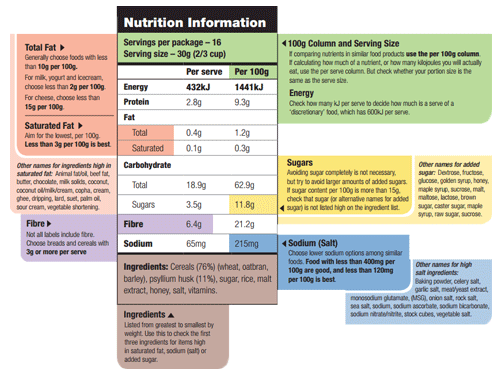
Simple equation
11 Facts About Organic Food | DoSomething.org Industry analysts estimate that US organic food sales were $28 billion in 2012 (over 4 percent of total at-home food sales), up 11 percent from 2011. [6] Products labeled "organic" may reflect higher prices because the production process is often on a smaller scale with more labor- and management-intensive practices and stricter regulations. [7]

Avoid the dairy - the alternatives are amazing! | Seize the day with Team Reid, powered by Juice ...
Organic foods: Are they safer? More nutritious? - Mayo Clinic Apr 22, 2022 · Also be careful not to mix up other common food labels with organic labels. For example, certified organic beef guidelines include pasture access during at least 120 days of grazing season and no growth hormones. But the labels "free-range" or "hormone-free" don't mean a farmer followed all guidelines for organic certification.

Natural Food Label: U.S. FDA Seeks Comment for Possible Definition | Fortune
Organic Food: 1. Introduction - GreenFacts The principles governing organic food in the European Union (EU) are defined in Regulation No 834/2007 and Regulation No 889/2008 on organic production and labelling. This method of production pursues the respect of nature's systems and cycles, a high level of biodiversity, responsible use of energy and natural resources such as water, soil, organic matter and air, and high animal welfare ...
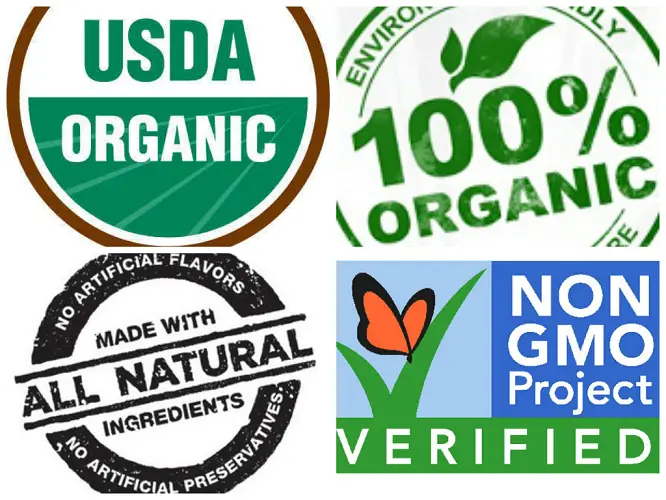
How to Avoid GMOs: What the USDA Organic Symbol Means | AltHealthWorks.com
What Does Organic Mean? The Facts about Organic Food Standards and Labels Only food labeled "organic" has been certified as meeting USDA organic standards. For more detailed information on the USDA organic standards, visit the USDA National Organic Program website or call the National Organic Program at 202-720-3252, or write USDA-AMS-TM-NOP, Room 4008 S. Bldg., Ag Stop 0268, 1400 Independence, SW, Washington, DC 20250.

Organic Food Standards and Labels – Fitness and Health Zone
10 Things You Should Know About Organic Labels Nov 20, 2019 — What Are the Requirements for an Organic Label? · Contain at least 95% organic ingredients · The remaining 5% must be allowed ingredients · Any ...
Post a Comment for "41 organic food standards and labels the facts"